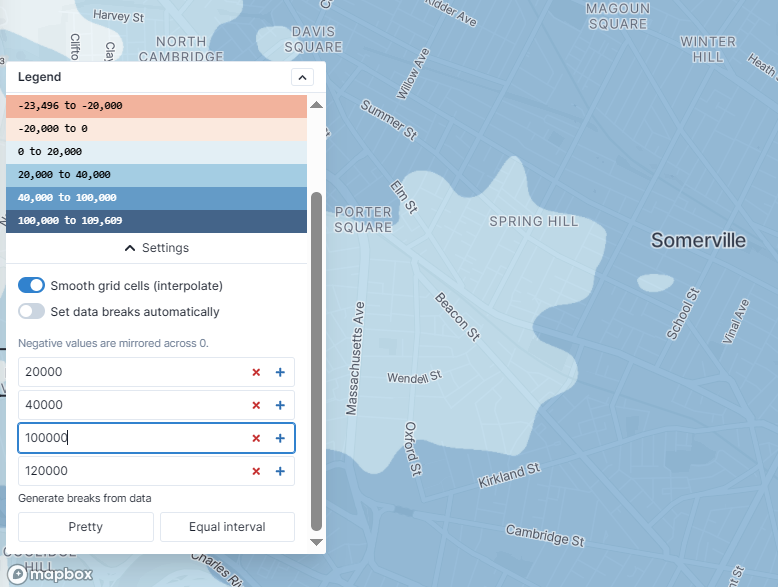
Setting custom breaks for the regional analysis map

The latest version of Conveyal (including v7.5 of the R5 routing engine):

  • Accelerates map display for completed regional analysis results (#986) and enables custom breaks for color bins
  • Adds the ability to download a combined .zip file of all destination layer, threshold, and travel time percentile combinations for a regional analysis
  • Uses requested walking speed (rather than a hard-coded default) when linking origin and destination points to the street network
  • Improves handling of origins and destinations linked to the same network edge (#980). This change may result in lower accessibility results compared to past versions of R5, especially near long network edges and when using low travel time cutoffs or decay functions.
  • Limits application of custom elevation data to walk and bike modes, not car (#972)
  • Enables new options for sidewalk restrictions, such as prohibiting bicycles or requiring step-free paths (#976).
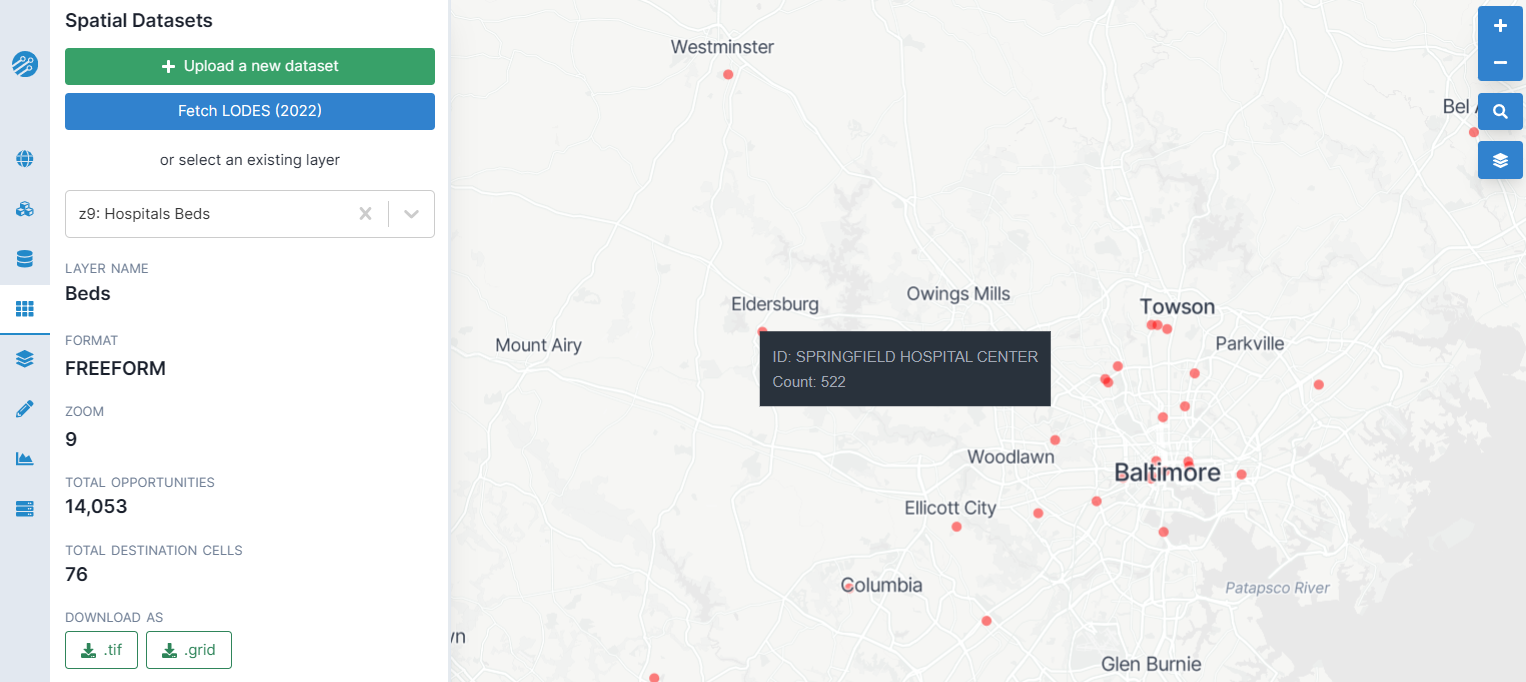
Inspecting freeform origins

The latest Conveyal routing engine is v7.4. With the latest user interface, this version:

  • Displays interactive freeform origins on the spatial dataset map
  • Enables dual access (time required to reach threshold number of opportunities) for grid origins
  • Improves legibility of regional analysis result maps
  • Updates LODES job and workforce data for regions in the United States

The latest Conveyal routing engine is v7.3. This version:

  • Smooths regional analysis progress, especially when analyses of many different scenarios and on-street mode combinations are queued up
  • Enables advanced network bundle configuration, including options to:
    • Save bike and car-related data tables into built networks, which eliminates subsequent re-calculation of these tables and can substantially reduce computation time for large regional analyses
    • Build modifications into baseline network bundles
    • Test experimental routing rules that force pedestrian routing to use sidewalks
  • Updates underlying database libraries, facilitating continued security and stability updates over the coming years